Walk into any kind of significant bread kitchen and you'll detect the slim steel capsules tucked in a drawer or lined up on a rack. Laughing gas cream chargers have ended up being common package for cooks and home fanatics that desire precision whipping, secure foams, and quickly mixtures. They're compact, cost effective, and stealthily easy. Twist, cost, shake, give. Yet that simplicity conceals a pressurized gas, cryogenic cold, and a couple of risks that just appear when something is misused or inadequately maintained.
I discovered this the genuine method: by flinching at a hairline split in a dispenser head during a Friday supper rush, and by scraping over-whipped lotion off desserts after a coworker discharged 3 battery chargers for a single pint. Security begins with comprehending the tool, the materials in play, and the little choices that maintain every little thing smooth.
This overview concentrates on useful, lived knowledge. If you use cream chargers, whipped cream chargers, N2O cream chargers, or Nitrous Oxide cream chargers in your kitchen area, these are the guardrails that keep you on the appropriate side of risk-free and effective.
What a charger actually does
A cream battery charger is a tiny steel cartridge filled with laughing gas. Inside a whipped cream dispenser, that gas liquifies into the whipping cream and expands as tiny bubbles when dispensed. The outcome is stable foam, thanks to fat and milk proteins creating a network around the gas. When you obtain the proportion right, you obtain abundant, pillowy cream that holds its form and doesn't weep.
A few specifics matter:
- Gas kind. Food-grade N2O is the requirement. It is chemically inert with milk, badly soluble in water contrasted to CO2, and it does not acidify the blend. That last information is crucial to stability and taste. Pressure. A solitary 8 g battery charger generally brings a basic 0.5 liter dispenser to the right pressure for dairy-based whips. Larger dispensers may need two chargers. Overcharging adds risk without boosting texture. Temperature. Lotion whips far better cool because gas solubility rises and fat structures straighten. Warm cream has a tendency to produce loosened foam or sputter.
When a dispenser hisses or spits rather than generating a clean ribbon, the typical wrongdoers are temperature level, fat percent, or over/under gassing.
Real dangers, not scare stories
Nitrous oxide is extensively utilized in kitchen areas, health centers, and industry. The safety and security document is solid when equipment is designed for food solution and made use of correctly. Difficulty shows up at the edges, and those sides are predictable.
- Pressure injuries and tears. Dispensers and battery chargers are vessels under stress. Affordable or broken heads, dissimilar strings, and removed seals can fall short unexpectedly. A lot of failures are avoidable with routine examination and by sticking to suitable brands. Frostbite and chilly burns. A pierced charger or a leak can blast cryogenic gas and cooled steel. Skin call can ice up in secs. Respect the temperature, manage battery chargers by the base, and never test leaks with a fingertip. Chemical contamination. Non-food-grade gases or lubricants, flaking inner coverings, or deteriorated gaskets can taint the item. If your whipped lotion tastes metallic or sour, stop and explore. Fix the origin; don't mask it with sugar. Misuse and inhalation. Utilizing N2O recreationally is dangerous and prohibited in several areas. Cooking cylinders are not developed for that. Breathing in can deprive the brain of oxygen and trigger vitamin B12 depletion with repetitive direct exposure. Keep chargers secured and make policies specific in shared kitchens.
If you've never ever had a near-miss, good. Maintain it this way by presuming the risks are actual, even if everything looks innocent on the surface.
Buy like a professional: battery chargers, dispensers, and seals
The most safe process starts prior to you pull a tab.
Buy trustworthy brand names with food-grade accreditation. Not all cartridges are developed equal. Look for consistent kinking, clean steel, and lot numbers. A set with oily deposit around the neck is a red flag. An appropriate charger needs to be completely dry, odorless, and uniform.
Match charger size to dispenser dimension. A 0.25 liter head commonly requires one 8 g battery charger. A 0.5 liter unit typically needs one to two. One liter dispensers generally take two. Inspect the manufacturer guidance for your certain design, and keep in mind, a lot more is not much better. The point is steady pressure, not optimal force.
Check gasket and head product. Dispensers commonly utilize stainless steel or light weight aluminum heads. Stainless is more durable and less vulnerable to microfractures. Food silicone gaskets last longer under cool and stress than enigma rubber. If a gasket is squashed, broken, or smells off, change it. Keep a tiny components kit available: gaskets, valve springs, and tips.
Avoid mixed-thread adapters unless created for your system. Cross-threading is a silent awesome. If you feel resistance when inserting the battery charger owner, back off and straighten. Compeling it can cut steel right into the gas path or deform the seat.
Cold lotion, calm hands
Technique stops 90 percent of frustrations. The rest is maintenance.
Chill every little thing. Lotion, dispenser body, and also the pointer. I've maintained dispensers in the refrigerator for thirty minutes and a steel idea in an ice bathroom throughout solution. A cooler system liquifies gas extra evenly and stays clear of sputtering bursts.
Aim for 33 to 36 percent fat for dairy. Whipping cream in that array whips dependably. Lower fat will certainly struggle. Ultra-pasteurized lotion works, but it tends to be a little much less silky, so include a little bit of stabilizer if you need long term hold.
Strain mixes entering into the bottle. A fleck of undissolved delicious chocolate or a seed fragment can catch in the shutoff. A fine-mesh filter or a coffee filter conserves you from mid-service blockages that compel you to vent the container and start over.
Shake, don't slam. After charging, tremble the dispenser up and down 5 to 8 times for dairy mixtures. That distributes the gas without defeating the fat into butter. For thinner prep work, like light foams or fast infusions, fewer drinks and even more rest time work better.
Dispense with the bottle inverted. The dip tube inside is made for the bottle to be upside-down. If you turn as well shallow, you'll air vent gas as opposed to item and the pressure will certainly fall unevenly.
How lots of battery chargers, really
The obsession with several chargers per bottle usually comes from chasing speed or density. Here's the straightforward policy from years on the line: use the minimum that achieves clean, steady foam, then stop.
One 8 g charger commonly gets the job done for 0.5 litre dairy products whips. Add a second just if the cream feels weak after appropriate chilling and trembling. For one liter dispensers, 2 chargers, introduced individually, is typical. Discharging 3 or more into a 0.5 liter bottle is a shortcut to butter flecks, spitting foam, or a https://canvas.instructure.com/eportfolios/3370559/danteeisf235/n2o-vs-co2-comparing-gases-used-in-culinary-applications stressed out gasket.
If you're collaborating with non-dairy bases like coconut lotion or aquafaba, the actions adjustments, and gas uptake can be finicky. Anticipate to test small sets and change. Some bases favor a stabilizer like 0.2 to 0.5 percent xanthan or a dash of basic syrup to improve appearance and hold.
The appropriate way to charge
Here is a tight, risk-free series that reduces errors and mess. Post it near the prep area if you educate a team.
- Inspect the dispenser, shutoff, gasket, and idea. If anything looks used or filthy, tidy or replace prior to use. Fill to the max line with a stretched, chilly combination. Protect the head equally, hand tight. Insert one charger into the owner, screw it on till you hear the puncture, after that a tidy hiss. Shake up and down 5 to 8 times. Rest the container in the refrigerator for 1 to 3 minutes, test a small squirt, then determine if a 2nd battery charger is warranted. If of course, vent a small amount first to avoid overpressure, then include the second. Always dispense inverted. If circulation deteriorates, cool once again before adding gas. Never stack chargers endlessly to deal with a warm or problematic mix.
Cleanliness that in fact protects against failures
A lot of "mystery" sputtering and off tastes are sanitation problems putting on a mechanical mask. The valve setting up is little, difficult, and commonly ignored.
Disassemble totally after each use. Remove the idea, loosen the head, get the gasket and valve stem. Most food residue hides in the nozzle and under the gasket seat. Make use of a little brush created for the siphon tube and valve. Warm water and a light, unscented detergent suffice. Wash till you taste no soap. Dry entirely, specifically the strings and valve cavity.
Inspect while you cleanse. If the valve spring has corrosion areas or the silicone gasket really feels sticky or swollen, switch them. A small maintenance package sets you back far less than a solution call or a messed up set during a busy shift.
Avoid aggressive chemicals. Bleach and severe degreasers can pit light weight aluminum and deteriorate elastomers. If you need to sterilize, utilize a food-safe sanitizer at the correct dilution and rinse thoroughly.
Store open up to air. After drying, leave the head off the bottle or shop freely threaded so recurring dampness can escape. Sealing dampness inside urges odor and microbial growth.
Temperature, storage, and the freezer myth
Every culinary trainee grabs the freezer once. It looks smart: a blast of chilly ought to support the lotion. The reality is messier.
Refrigeration is suitable. A crammed dispenser holds for 24 to two days at 2 to 4 C, in some cases much longer for sweetened or maintained lotions. Shake gently each time you utilize it. If the foam begins to loosen after a day, the gas has partly gotten away or the fat network has relaxed. A brief chill and one mild shake normally restores flow.
Freezing a charged dispenser is risky. Broadening ice can distort the siphon tube, anxiety seals, and catch pockets of gas. When you thaw, you may get a rise of pressure and a misplaced gasket. If you should ice up an item for service, give the foam right into a tray, freeze it in the preferred shape, and store that item, not the pressurized device.
Never leave a pressurized dispenser in a hot cars and truck or near warm sources. Nitrous oxide broadens with warm. Going beyond the temperature level rating, often around 50 C for lots of customer dispensers, welcomes a catastrophic failure. On the line, keep bottles far from salamanders and combis. In transport, utilize insulated carriers and vented storage.
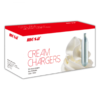
Store extra battery chargers in an amazing, completely dry area. Moisture advertises rust. If a charger shows rust or damages, recycle it, do not make use of it.
Off-label techniques, and exactly how to do them safely
Experienced cooks use N2O cream chargers for greater than whipped cream. Rapid mixtures, airy batters, supported sauces, and cool foam mixed drinks all benefit. Each method includes caveats.
Rapid infusions. For natural herbs in alcohol, combine in the container, cost as soon as, remainder 1 to 5 minutes chilly, after that launch pressure slowly upright prior to opening up. If you vent as well quick, the fluid will certainly fountain. Pressure promptly to avoid bitterness. Avoid infusing carbonated drinks in a lotion dispenser; that's carbon dioxide territory.
Batter aeration. N2O can lighten tempura-style batters. Keep the batter cool and thin. Charge once for a 0.5 litre bottle, tremble gently, and use within 30 minutes. Overcharging makes it dense and complicated to control.
Savory foams and hot prep work. Warm and pressure do not blend casually. Never heat up a sealed, charged dispenser on direct warmth or above maker temperatures. For warm foams, use a water bathroom and a temperature probe. Many gaskets endure as much as roughly 70 C, but validate your version. Stress raises with temperature, and warm fat can erode seals faster.
Non-dairy foams. Coconut, oat, or nut bases might require stabilizers for body. Small dosages of xanthan or agar aid. Examination in 100 to 200 ml increments prior to scaling. Tidy even more aggressively after making use of sweet or sticky bases, which can glue the valve.
Cocktails. Alcohol whips and froths, but dissolves nitrogen differently and can break down gaskets quicker. Maintain ABV reduced in the dispenser, and stress everything. And keep in mind that every mixer terminal is cramped; a pressurized container deserves a specialized, stable spot away from ice wells and active elbows.
What to do when things go wrong
An obstructed valve, a seized head, or a sluggish leakage will ultimately appear if you make use of these devices often. Panic isn't valuable. A calm checklist is.
If the shutoff is obstructed mid-service, cool the dispenser for a few minutes. Often the fat thickens enough to dislodge the clog with a brief burst. If that fails, do not require the trigger. Location the bottle upright in a deep sink, wrap the head with a towel, and gently air vent by loosening the pointer a quarter turn up until stress drops. Only disassemble when you are specific it is depressurized. Clear the nozzle and the shutoff stem with cozy water and a brush.
If the head is taken after cooling, do not wrench it with pliers. Warm the head gently under running warm water to unwind the gasket, after that attempt once more. Pliers can warp aluminum and develop microleaks you will fight for months.
If you listen to a sluggish hiss from the head joint, the gasket is likely dirty or mis-seated. Chill the container, air vent gradually, disassemble, clean, and replace the gasket. If a hiss comes from the charger owner instantly after slit, stop and re-seat. Cross-threading or a damaged charger neck may be at fault. Never keep billing with a leak.

If the dispenser fell or took a hit, retire it for evaluation. A bent siphon tube or hairline fracture is not a later issue to resolve. Pressurizing an endangered vessel is an invite to a failure you will certainly bear in mind for all the incorrect reasons.
Ethics and work environment safety
Kitchens are group sporting activities. Security with N2O cream chargers enhances when the guidelines are explicit and shared.
Lock down storage. Maintain chargers in a labeled, shut container in the cupboard or a regulated cabinet. Do not leave sleeves loose on a bar or prep table where they go away individually. Track stock like you would spirits or knives.
Train brand-new team with hands-on demos. A five-minute short conserves hours later on. Walk through disassembly, cleansing, gasket checks, and charging cadence. Allow them feel the distinction between cozy and properly cooled foam.
Ban recreational misuse plainly and implement it. Besides legal and wellness worries, it damages group culture and transforms a routine device into an obligation. If you run a place with public accessibility, consider tamper-resistant storage and marginal display.
Provide PPE for upkeep. Nitrile gloves assist during deep cleaning when degreasing valves, and towels avoid frostbite when screening for leaks. It's fundamental, yet it signifies that the device is entitled to respect.
Environmental sense: making use of and getting rid of responsibly
Each spent charger is steel. That's recyclable in a lot of communities. The key is to make it very easy and certain.
Collect spent chargers in a devoted, clearly classified container. Pierced chargers are already empty if used correctly, but some facilities prefer that individuals validate they are released. Never ever toss spent chargers in blended garbage where they come to be a risk if compacted.
Avoid non-standard dimensions and rare brands that complicate recycling. If your location supports steel recycling yet not mixed products, get rid of any plastic sleeves or product packaging before binning.
Consider bigger cyndrical tubes if your quantity is high. Some operations switch over to refillable systems with regulators for both economic and ecological factors. That requires training and different safety methods, yet it can minimize waste significantly.
Spotting top quality: the tiny information that matter
You can smell a poor set of battery chargers or a tired dispenser if you recognize the tells.
Chargers must be tidy, uniform, and completely dry. No oily luster, no metal odor, no visible corrosion, and no dented sides. The kink ought to be smooth and consistent. A rough or unbalanced crimp can grab in the holder.
Dispenser threads must be crisp. Light weight aluminum that feels soft or shows bright, smeared string marks is wearing. Stainless heads must really feel larger and withstand scratching. The gasket should have rebound when pressed, not stay flattened.
Foam structure talks. Metallic flavor implies contamination, often from old gaskets or light weight aluminum wear. Big bubble spray suggests low fat or not enough chilling. Butter streaks indicate over-shaking or overcharging.
When in doubt, established the tool aside and reach for a backup. Chefs keep a 2nd dispenser forever reason.
Myths that won't die
A few persistent misconceptions set you back cash and safety.
"More battery chargers equals much better foam." No. As soon as gas is liquified to its saturation point at your working temperature level, additional pressure includes danger, not structure. Obtain cooler, not even more pressurized.
"You can examine leakages with soapy water on the head." You can, however it's untidy and deceptive in food solution. Better to listen, really feel for cold places with a gloved hand, and inspect the gasket seat. If required, test off the line, after that wash and disinfect thoroughly.
"Any kind of gas functions the same." CO2 acidifies and develops sour milk. Air whipping is possible, however unsteady and irregular in a siphon. N2O is picked completely factors: solubility, nonpartisanship, and stability.
"Icing up a charged dispenser maintains it fresh." It harms components and destabilizes the product. Refrigeration is enough. If you require ultra-long hold, sweeten or stabilize properly and plan set dimensions realistically.
A secure cooking area rhythm
Great cooking areas operate on habits. Construct little regimens around your N2O cream chargers and the device disappears into the background, doing its task predictably.
Keep the dispenser and lotion cold, every time. Evaluate gaskets as response. Charge modestly and test before including much more. Clean thoroughly, change small parts without hesitation, and shop components completely dry. Treat battery chargers like specialist equipment, not party favors.
I've watched a bread cook rescue a solution by steadly airing vent, switching an exhausted gasket, and recharging in much less than 3 minutes, while tickets maintained printing. The difference between a dramatization and a blip is prep work and respect for the tool.
Use laughing gas cream chargers with care and they'll pay you back with uniformity: thick rosettes, silken espumas, fast infusions, and fewer final solutions. Safety and security is not a different job; it's the line in between hoping and understanding what will certainly come out of the nozzle.